Why printed mats crack, peel and fade — and how to test for it.
Almost every complaint about a printed mat is one of four failures, and all four are decided by the construction rather than by the artwork. Each one has a test you can run on a sample in under a minute.
Filed under MaterialsPublished October 2026Reading 5 min
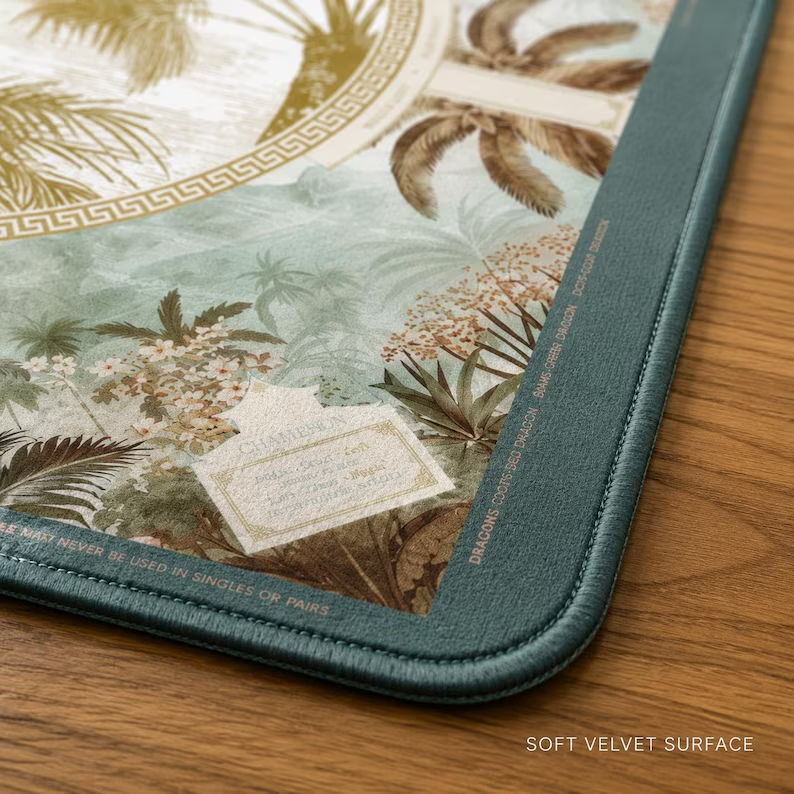
Plate 01Stitched border, no film layer to crack
01 / The print is a film, not a dye
If the colour sits on top of the mat, it will leave with the first thing that rubs it: a hand, a bag, a chair castor, a scrubbing brush. Surface prints look identical to sublimated ones in a photograph and fail differently in use.
Test: fold the printed area over your thumb, then rub the crease with your nail. A sublimated print is unchanged. A surface print crazes, goes white, or lifts at the crease.
02 / The base embrittles in the cold
PVC plasticised for a soft feel loses its plasticiser over time and hardens; below about 10 °C the process accelerates. A mat by a warehouse door, in an unheated studio or in a car boot in winter cracks along a castor line.
Test: put the sample in a freezer for two hours, then bend it 90°. Natural rubber and polycarbonate survive. Thin PVC cracks or whitens at the fold.
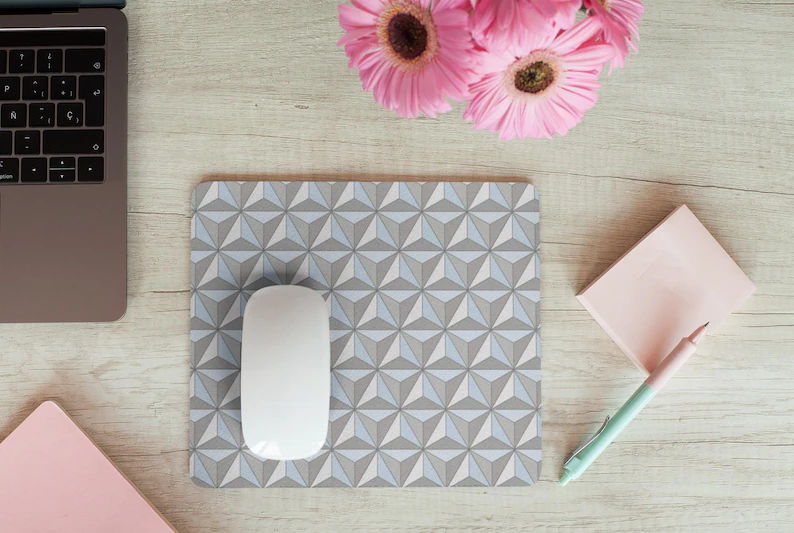
Fig. 02Rigid face, printed
03 / Rolled memory, and the curl that follows
A mat rolled tightly for shipping holds a set. The curl lifts the edge off the table, castors and chair legs catch it, and the load concentrates on a 20 mm strip. This is how a mat that was fine in the factory fails in week one.
Test: unroll the sample and leave it on a flat surface for 24 hours. If the edge is still lifted by more than about 5 mm, either the mat is too thick for the tube or it was rolled too tight — and both are packaging decisions, not material ones.
04 / UV, and the two-year fade
Sublimation dyes are stable indoors for the life of the mat. In direct sun the UV component breaks the dye and a saturated red becomes a dusty pink over 12–24 months. That is chemistry, and no print method on fabric escapes it.
Test: there is no quick one. Use judgement instead — if the mat will be outdoors and uncovered, spec moulded rubber with colour in the material rather than a print on a fabric face.
The one-line order spec that avoids all fourSublimated print into a polyester face, natural rubber base, 2–3 mm, stitched edge, shipped flat or loosely rolled. It is not the cheapest combination on any single line item, and it is the one that generates the fewest returns.
Fig. 04Coated top
Plates
Seen on the press
03 plates
Border detail01Surface weave02Hard surface03
Questions
Can a printed mat be repaired?
A faded or abraded printed face cannot be restored — the colour is either in the fibre or gone. A curled edge can sometimes be flattened with a day under weight. Prevention is the only real fix.
Is peeling the same as cracking?
No. Peeling is a surface print lifting from the substrate, usually at an edge or a fold. Cracking is the base material failing, usually at a castor point in the cold. Different causes, different fixes: change the print method for the first, change the compound for the second.
How long should a printed mat last?
Indoors, five years or more for a sublimated print on natural rubber. A desk mat in daily use typically outlives the desk. Outdoors, expect 12–24 months before visible fade, which is why uncovered entrances get moulded rubber instead.
Does washing a mat shorten its life?
Machine washing breaks down the rubber base and the mat stops lying flat. A damp wipe with mild soap is fine indefinitely. Fabric bath mats on a TPR back are the exception — those are designed for a 30 °C wash.
What is the single most common cause of a return?
Curl. The mat arrives rolled, does not lie flat, and the buyer reads it as a defect. It is a packaging decision, and the fix is a wider tube, a looser roll, or shipping flat.
How can I test cold performance without a freezer?
Leave the sample in a car overnight in winter, then bend a corner 90°. PVC whitens or cracks at the fold; natural rubber and polycarbonate do not. If you need a number rather than a demonstration, ask the supplier for the compound's glass transition temperature.