1-piece MOQ — no tooling fee Any shape · any artwork Dropship worldwide Full JIT management FBA · TEMU · TikTok Shop approved 12 product lines · one factory 1-piece MOQ — no tooling fee Any shape · any artwork Dropship worldwide Full JIT management FBA · TEMU · TikTok Shop approved 12 product lines · one factory
Home/Journal/Sourcing/Landed cost

Journal / Sourcing

Landed Cost Per Mat in 2026: The Six Items Buyers Forget

The unit price on a quotation is the smallest part of what a mat costs you. Freight, duty, clearance fees and returns typically add another 30–80% — and the gap between a good order and a bad one is almost never at the factory gate.

Category: SourcingPublished August 20266 min read
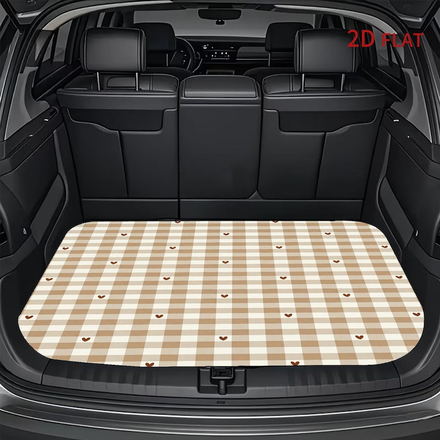
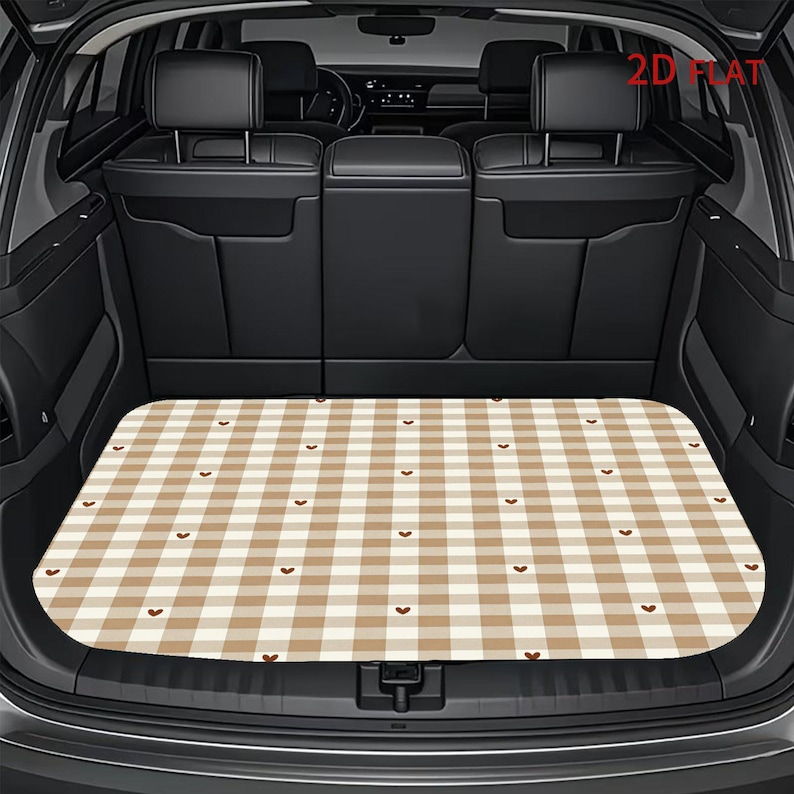
Plate 01Gingham heart-print trunk mat in a dark grey car boot
Freight is set by the carton, not the print

Run the numbers, with real figures

Example: 500 custom mahjong mats, 90 × 90 cm, 3 mm, stitched edge, FOB Xiamen $6.80. The figures below only demonstrate the method — they are not a quotation. Your freight and duty will differ by route, date and tariff heading.

$6.80 × 500 = $3,400. Fifty mats per carton, ten cartons, 0.6 m³, 120 kg gross. LCL ocean freight from $180 → $180. Duty at 8% of FOB → $272. Clearance and document fees → $150.

Total landed cost $4,002, or $8.00 per mat — not $6.80. The factory price is only 85% of the answer.

The six cost items

ItemTypical shareWhere it hides
Factory unit price (FOB)60–75%On the quotation
Freight5–15%Chargeable weight, not actual weight
Duty and taxes0–12%Depends on HS code and origin; can change month to month
Clearance, documents, port fees2–4%Fixed charges — worst on small orders
Platform commission8–15% of retailNot a goods cost, but it eats margin
Returns and rework1–5%Curling, colour drift, sizing — all preventable
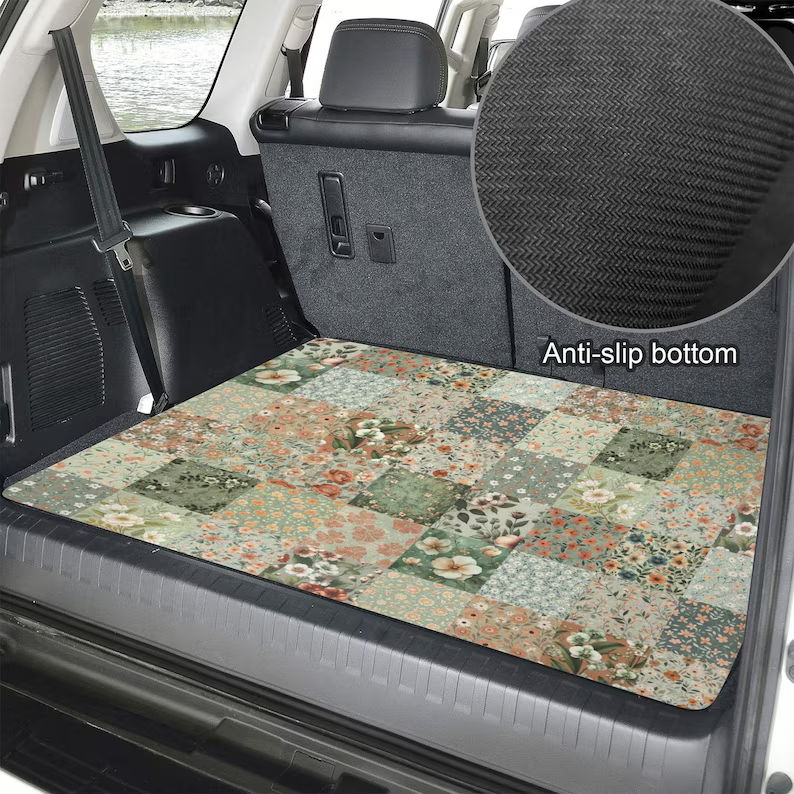
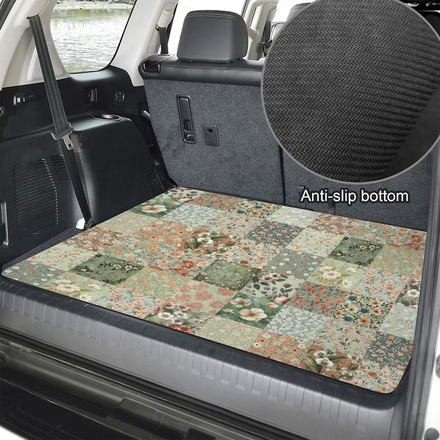
Plate 02Trunk mat in a station wagon boot, labelled with its anti-slip backing
Flat-pack, cut and ready

Where margin is actually decided

At a $29.99 retail price, 15% platform commission takes $4.50 and fulfilment takes another $4.00–5.00. With an $8.00 landed cost, roughly $12 of gross margin is left. Every $1 change in landed cost moves margin by 8%; every $1 change in retail price moves it by only 3%.

So the three line items worth fighting over are freight, duty and returns — not the factory price. A full 20-foot container spreads cheaply per piece; ten cartons by air do not. But air-freighting those ten cartons is often still right for a first order, because stocking out costs more.

The three biggest levers

  1. Combine orders. Two 250-mat orders in the same month cost more to ship than one 500-mat order, and the second one pays the full set of fixed fees again.
  2. Cut volume, not weight. Mats are charged by cubic measure. Rolling tighter, using a narrower core, or flat-packing in a thinner carton moves chargeable weight more than switching to a cheaper fabric.
  3. Stop returns at the source. Most returns are curling edges and colour drift, and both are locked in when you place the order — specify a wider core, keep a signed sample, and approve a pre-production proof.
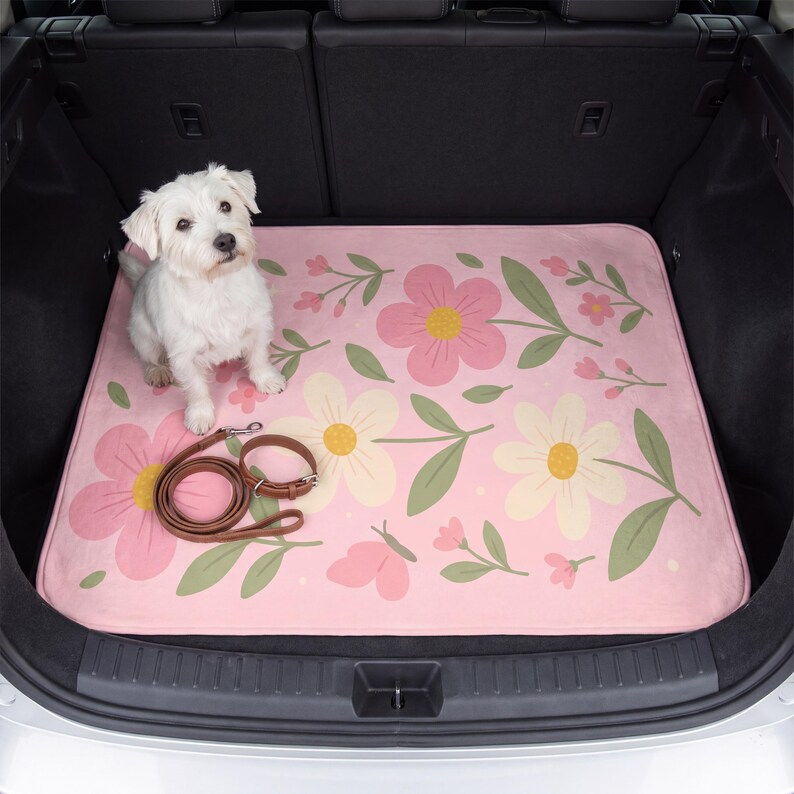
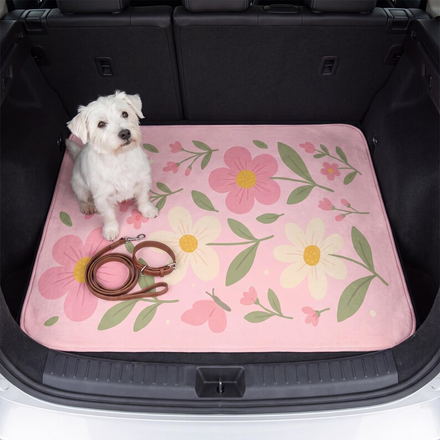
Plate 04Pink cherry-blossom printed trunk mat with a small dog sitting on it
Lays flat — no folding needed

Gallery

On the machine floor

Plate 03
Gingham heart-print trunk mat in a dark grey car boot
Carton arithmetic01
Trunk mat in a station wagon boot, labelled with its anti-slip backing
Flat-pack02
Pink cherry-blossom printed trunk mat with a small dog sitting on it
Laid flat03

Frequently asked questions

What does landed cost mean?
Every cost of getting a sellable unit to your warehouse or platform fulfilment centre: goods, freight, duty, clearance fees, and any inspection or documentation charges. Build your retail price on that number, not on the FOB unit price.
Is air freight worth it for mats?
For a first order or a restock on a live listing, usually yes. Ten cartons by air cost a few hundred dollars more than sea freight and arrive four weeks sooner; four weeks out of stock costs more than the freight difference.
How do I check the duty rate?
Ask your broker to confirm your HS code in writing, plus the current rate for your origin and destination. Rates move — especially on Chinese-origin goods entering the US — so a rate quoted two years ago is not the rate. HS codes and duty →
Why is freight charged by volume, not weight?
Because mats are light but bulky. Carriers charge the greater of actual weight and volumetric weight, and rolled mats almost always lose on volumetric weight. That is why carton density is a cost lever.
What is the biggest avoidable cost?
Rework caused by a wrong size. A mat cut to an estimated size means running the whole process a second time: remake, refreight, reduty. A tape measure prevents it.
FOB or DDP for a first order?
Choose DDP if you want one delivered price, no customs paperwork, and a supplier you trust to declare honestly. Choose FOB if you want to see the freight line and control your own broker — it also forces the duty rate into the open, which a DDP quote hides.

Keep reading

Send the artwork. Get a mockup tomorrow.

Artwork and one table measurement is all we need. No deposit, no tooling fee, one-piece minimum.