The confusion, in one sentence
Diatomite is a surface. Rubber is a base. A diatomite mat usually has a rubber or cork pad under it; a rubber mat usually has a printed polyester surface bonded to it. The words describe different layers, which is why comparing them directly produces a spec that cannot be manufactured.
The useful question is not 'diatomite or rubber' but 'what does the top have to do, and what does the bottom have to do'. Top: absorb, grip a tile, take a print, feel a certain way underfoot. Bottom: stop the mat moving, protect the floor, survive cleaning.
The four combinations we actually build
| Top | Base | Product it becomes | Weak point |
|---|---|---|---|
| Diatomite board | Silicone feet or cork | Kitchen drying mat, bath mat | Breaks if dropped; pores load with limescale |
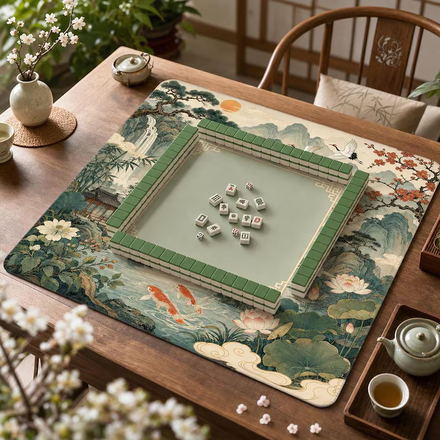
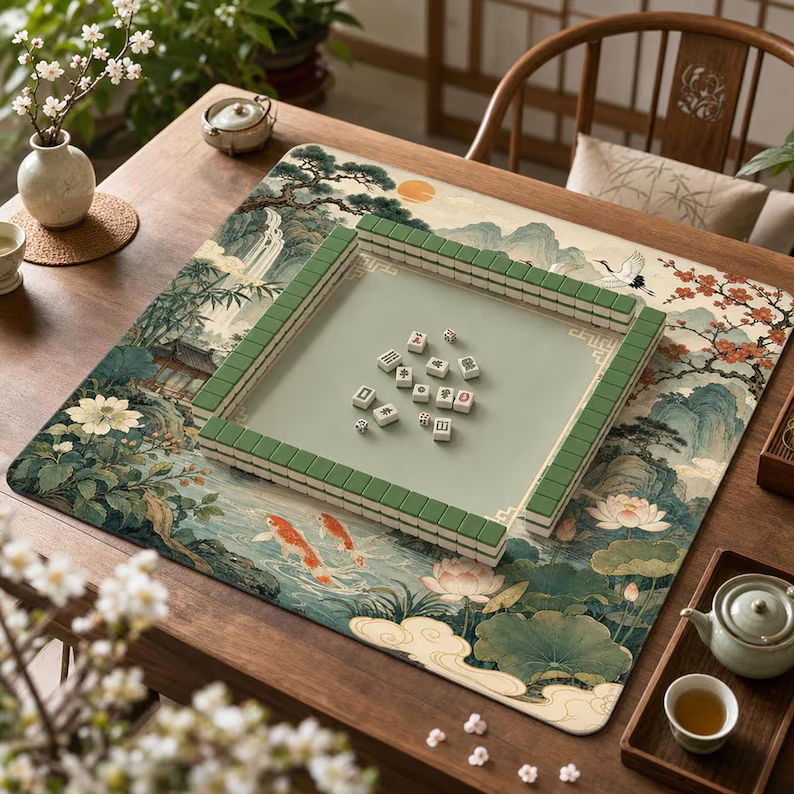
| Printed polyester | Natural rubber | Mahjong mat, desk mat, playmat | Rubber smell for 2–3 days when new |
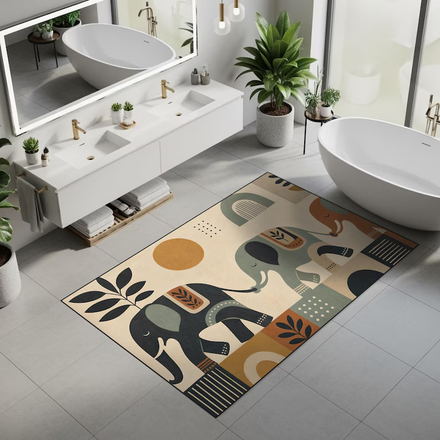
| Printed polyester | TPR dots | Bath mat, soft floor mat | TPR softens in a hot car or a hot wash |
| Printed velour | Nitrile granule | Doormat | Fades in direct sun over 1–2 years |
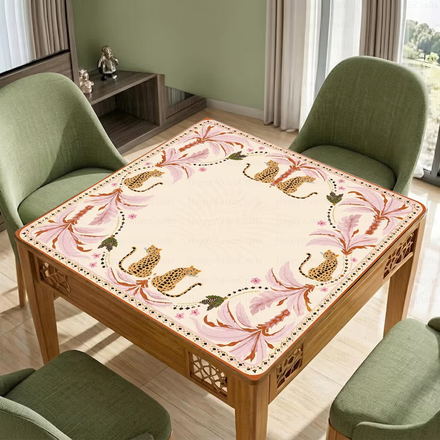
| Printed fabric | Flannel-sponge | Premium mahjong mat | Thicker, so it does not roll as small |
Four layers, total 2–5 mm
What diatomite is good at, and what it is not
Good at: absorbing water fast, staying dry to the touch, not growing a smell, and taking a matte UV print that looks like ink on paper. A 9 mm board pulled out of a sink run is dry in minutes.
Not good at: flexing. Diatomite is a rigid board, so it cannot roll, cannot go in a machine, and will chip if it lands on a corner. It is also a finite absorber — the pores fill with limescale and washing-up residue over a few years and need sanding back with 400-grit.
If your product has to fold, ship in a tube, or survive being thrown in a bag, diatomite is the wrong surface no matter how good the print looks.
What rubber is good at, and what it is not
Good at: gripping. A textured natural rubber base holds a glass table, a lacquered desk and a wet tile floor without adhesive, and lifts clean. It is also the reason a mahjong mat does not creep when four people push a wall in.
Not good at: being cheap or light. A 3 mm rubber-base mat weighs several times a polyester felt mat of the same size, and freight is priced on weight and volume. It also has a distinct smell for the first few days, which is normal off-gassing and not a defect.
Specifying both layers
A usable specification names six things: top material, base material, total thickness, edge finish, print method, and cut size. Anything less and two suppliers will quote different objects at the same price.
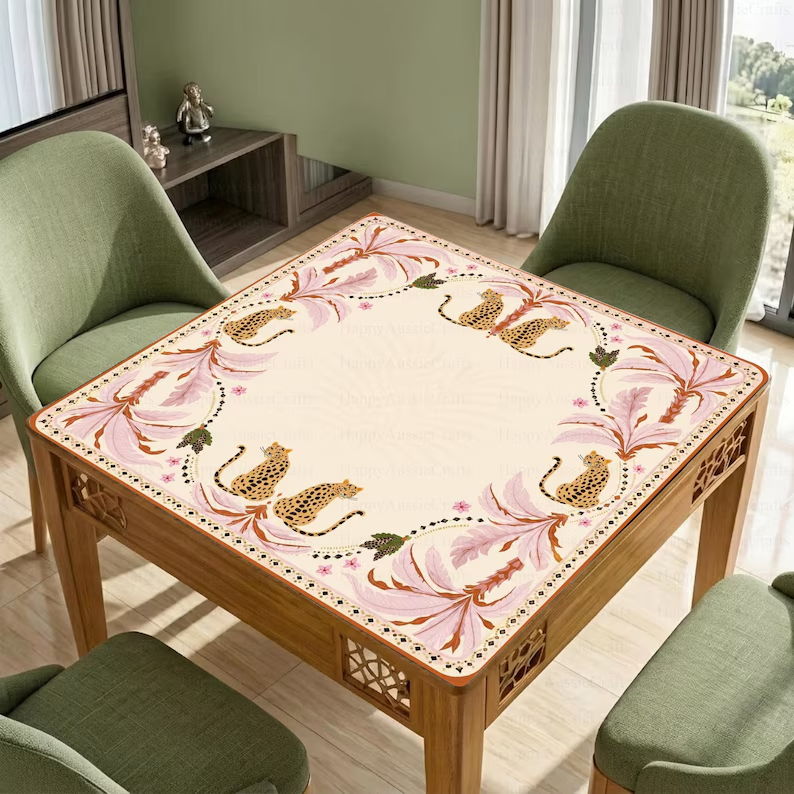
For a mahjong mat that means, for example: printed diatomite-faced polyester, natural rubber base, 3 mm total, stitched edge, dye-sublimation, 90 × 90 cm. Every word in that sentence changes the cost, and every word is checkable on a sample.
Plates
Seen on the press
03 plates