1-piece MOQ — no tooling fee Any shape · any artwork Dropship worldwide Full JIT management FBA · TEMU · TikTok Shop approved 12 product lines · one factory 1-piece MOQ — no tooling fee Any shape · any artwork Dropship worldwide Full JIT management FBA · TEMU · TikTok Shop approved 12 product lines · one factory

Journal / Materials & construction

Mat Thickness Guide: 2mm, 3mm or 5mm — What Changes (2026)

Thickness is the number buyers ask about most — and the one that quietly changes everything else: whether a mat lies flat after unrolling, how heavy freight gets, whether a stitched edge puckers, and the sound a tile makes when it lands.

Category: MaterialsPublished October 20265 min read
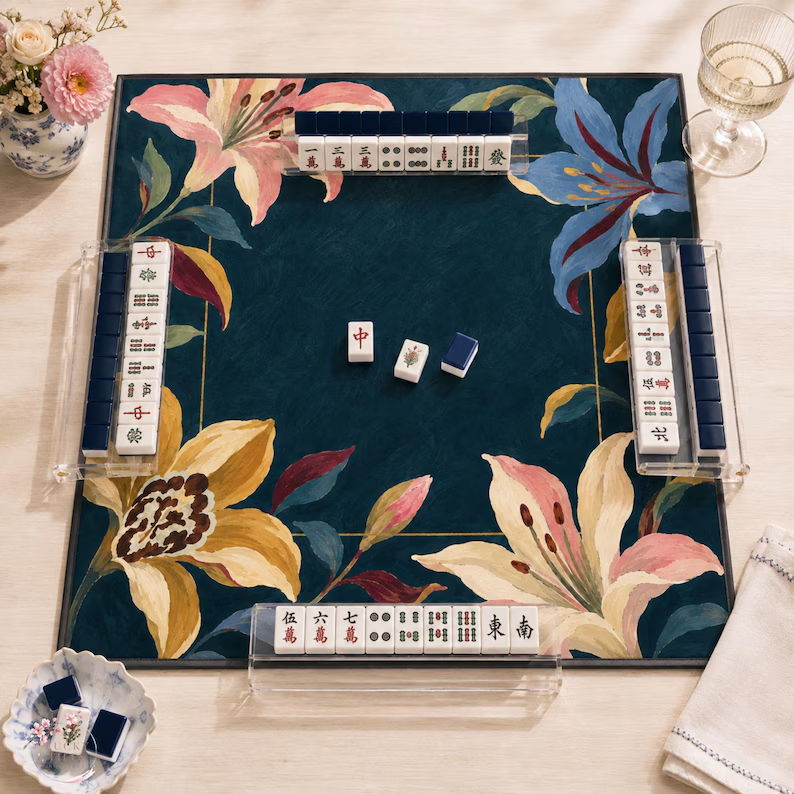
Plate 01Navy and gold Art Deco mahjong mat with tiles stacked in the centre
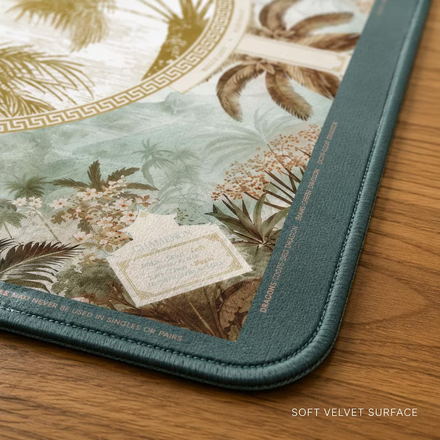
Buyers feel the edge thickness first

What each thickness is for

2mm is the easy-to-pack option. It rolls into a 40 mm paper tube, lies flat within an hour, and is the default for card mats and travel mats. Sound dampening is limited and it feels thin underfoot.

3mm is where most products settle: still rollable, perfectly flat on the table, noticeably quieter under falling tiles, and light enough that even small orders can ship by air.

5mm is for sound and comfort — mahjong mats in apartments, yoga mats for sensitive knees, mats on hard floors. It rolls less tightly, settles more slowly, and the extra weight goes straight onto your freight bill.

The four things thickness changes

2 mm3 mm5 mm
Rolls into40 mm paper tube50 mm paper tube70 mm+ tube, or flat-packed
Time to lie flatabout 1 hourabout 4 hoursabout 1 day
Tile-noise reductionSlightNoticeableStrong
Weight (90 × 90 cm)≈ 0.8 kg≈ 1.2 kg≈ 1.9 kg
Stitched edgeCleanCleanMay pucker at corners
Price index0.851.001.35
Plate 02Cream mahjong mat with a cameo-style border and a blank centre
2 / 3 / 5 mm stacked

Why thicker is not always better

Thickness creates two problems. The first is curling: a 5mm mat keeps a memory of the shipping roll and needs a day under weight before it lies flat — which is exactly the window in which buyers write reviews.

The second is edge behaviour. On a 5mm laminate, a stitched binding has to turn around a thicker corner; a tight radius means puckering or visible gathers. If you want both a thick mat and a stitched edge, keep the corner radius above 10 mm.

One-line picks for every scenario

Plate 04Navy and gold floral mahjong mat with tiles stacked at the four corners
3 mm on the table

Gallery

On the machine floor

Plate 03
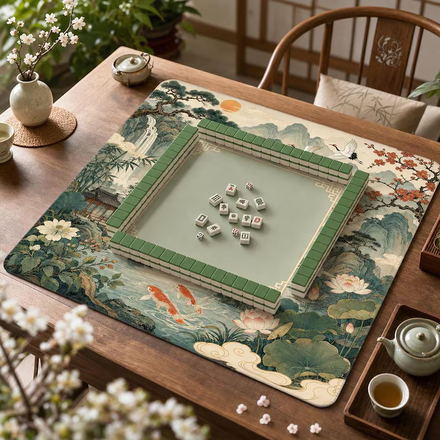
Map-print mahjong mat with a stitched border, laid on a wooden table
Edge thickness01
Green floral mahjong mat with stitched border, laid on a wooden table
Stitched edge02
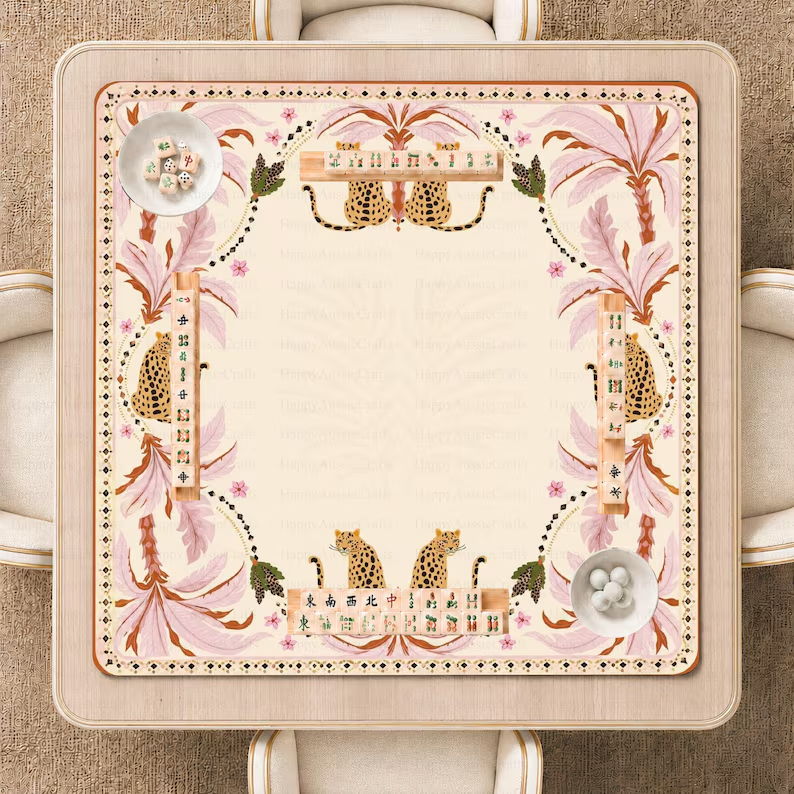
Cream mahjong mat with a cameo-style border and a blank centre
Laid flat03

Frequently asked questions

Does a thicker mat absorb more sound?
Up to a point, yes. The jump from 2mm to 3mm is more noticeable than 3mm to 5mm, because impact is absorbed in the first millimetre. Past 5mm, the gains are small but the weight penalty is not.
Will a 5mm mat lie flat straight out of the tube?
Eventually — usually within a day. A 2mm mat settles in about an hour. If it must lie flat immediately (retail display, market stall), ship it flat regardless of thickness — never rolled.
Why does my stitched edge pucker at the corners?
The binding has to turn around a corner on a thick laminate. A 5mm mat with a 5mm corner radius leaves too much material to take up cleanly. Increase the corner radius, go thinner, or switch to a binding-tape finish.
Does thickness equal weight?
No. A 6mm TPE yoga mat weighs about 1.1 kg; a 4mm natural rubber mat about 2.4 kg. Density differences between materials far outweigh thickness differences within one material. Always quote by grammage per square metre.
What thickness should I choose for a mahjong mat?
3mm is the default and what we recommend for a first order: quiet enough in an apartment, easy to roll away, and it won't turn the table into a mattress. Only go to 5mm when noise is the number-one complaint.
Does thickness change the finished dimensions?
No. Whether 2mm or 5mm, a cut size is a cut size. What changes is the roll diameter, the weight, and how much material the stitched binding has to take up at the corners — which is why thicker mats need a larger corner radius.

Keep reading

Send the artwork. Get a mockup tomorrow.

Artwork and one table measurement is all we need. No deposit, no tooling fee, 1-piece minimum.