1-piece MOQ — no tooling fee Any shape · any artwork Dropship worldwide Full JIT management FBA · TEMU · TikTok Shop approved 12 product lines · one factory 1-piece MOQ — no tooling fee Any shape · any artwork Dropship worldwide Full JIT management FBA · TEMU · TikTok Shop approved 12 product lines · one factory
Home/Journal/Materials/Edge finishes

Journal / Materials & construction

Mat Edge Finishes: Stitched, Overlocked or Hot-Cut (2026)

A mat fails at the edge first. The edge is where layers part, where the print frays, where a bag catches. Five finishes solve that problem in different ways — and the cost gap between the cheapest and the best is smaller than most buyers expect.

Category: MaterialsPublished October 20264 min read
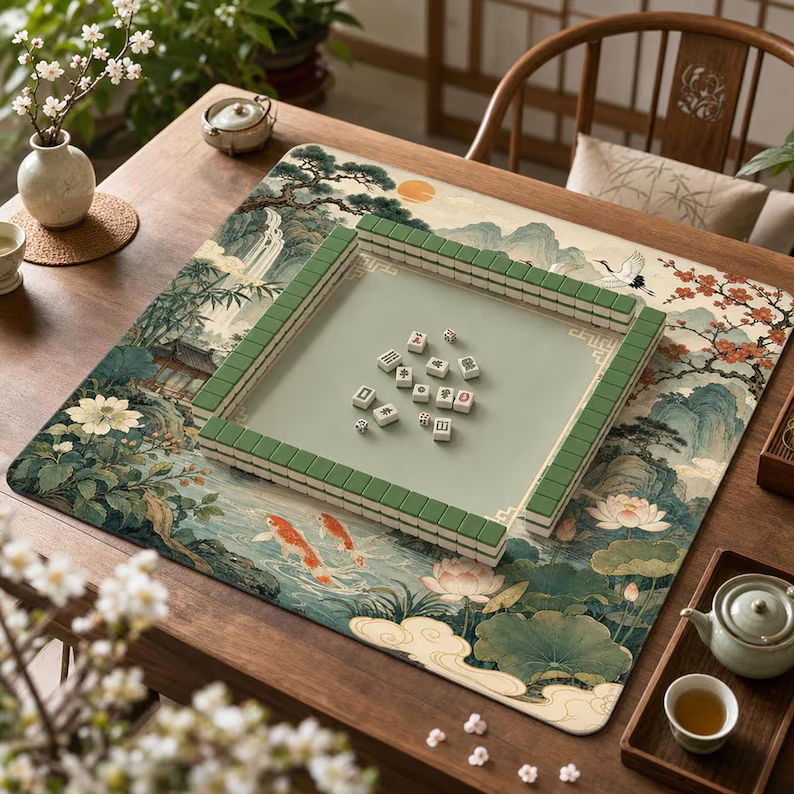
Plate 01Green floral printed mahjong mat on a wooden table with stitched binding
Stitched binding on a printed mat

Five edge finishes

Raw cut — die-cut with no treatment afterwards. Cheapest, and the only one to visibly degrade within the first month: the polyester face frays, the rubber core shows, and the corners curl.

Laser seal — the cut edge is melted as it is cut, fusing the fibres together. Flat, thread-free, clean outline. Good for thin mats and shaped outlines where stitching would distort the curve.

Overlock (locked edge) — a three- or four-thread stitch binds the two layers. Cheaper than stitched binding, coarser to the touch, and it can pucker on tight inward curves.

Stitched binding — a separate tape is folded over the edge and sewn through. The most durable and the best-feeling finish — the kind that survives being shoved into a backpack.

Hemmed edge — the edge is folded back and sewn down. Only works on single-layer fabric, so it is rarely used on mats with a rubber base.

Which finish suits which product

ProductFinishWhy
Desk mats (e-commerce)Stitched bindingSurvives a backpack; visibly different in reviews
TCG playmatsStitched bindingRolled, carried, dragged across tables
Mahjong matsStitched bindingHandled weekly, rolled for storage
Die-cut shaped matsLaser sealStitching cannot follow tight curves
Bar matsMoulded flat edgeNothing to catch; the border is part of the mould
Yoga matsLaser sealStitching would dig into the hands
DoormatsBound or mouldedThey fail by abrasion, not by flexing
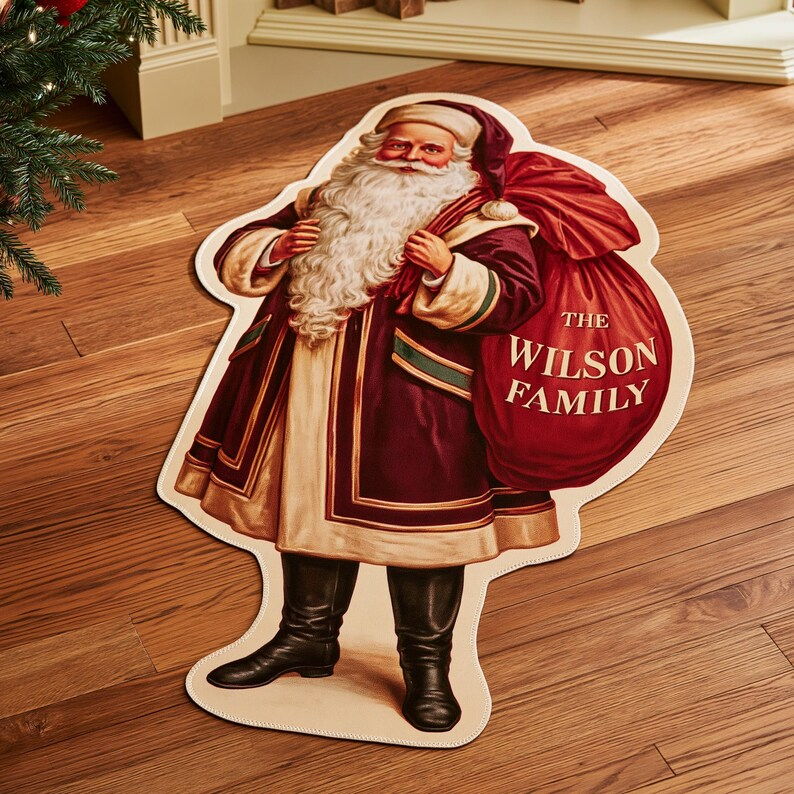
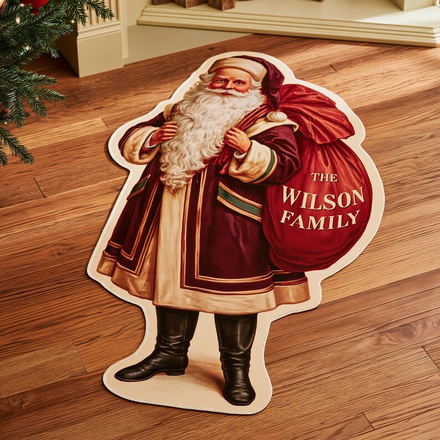
Plate 02Santa-shaped mat in a hallway, printed with a family surname
Hot-cut outline

The corner problem

Every finish is easy on a straight edge and hard at a corner. At a 90° corner the binding tape must turn and gather; at a 5 mm radius it must compress. Too much material puckers, too little leaves a gap.

Two fixes: on mats 3 mm and thicker, open the corner radius to at least 10 mm; or switch tight decorative curves to a laser seal. A sharp 90° corner on a 5 mm stitched mat will always gather slightly — that is geometry, not workmanship.

Cost in context

At small volumes stitched binding usually adds 8–12% to the unit price, less at scale. Against a raw cut, it is the cheapest upgrade in the whole product: it removes the most common cosmetic complaint, extends life, and is the detail buyers most like to photograph up close.
If you change one thingUpgrade any mat that gets handled repeatedly from a raw cut to stitched binding. It is the single highest-return spec change on a printed mat.
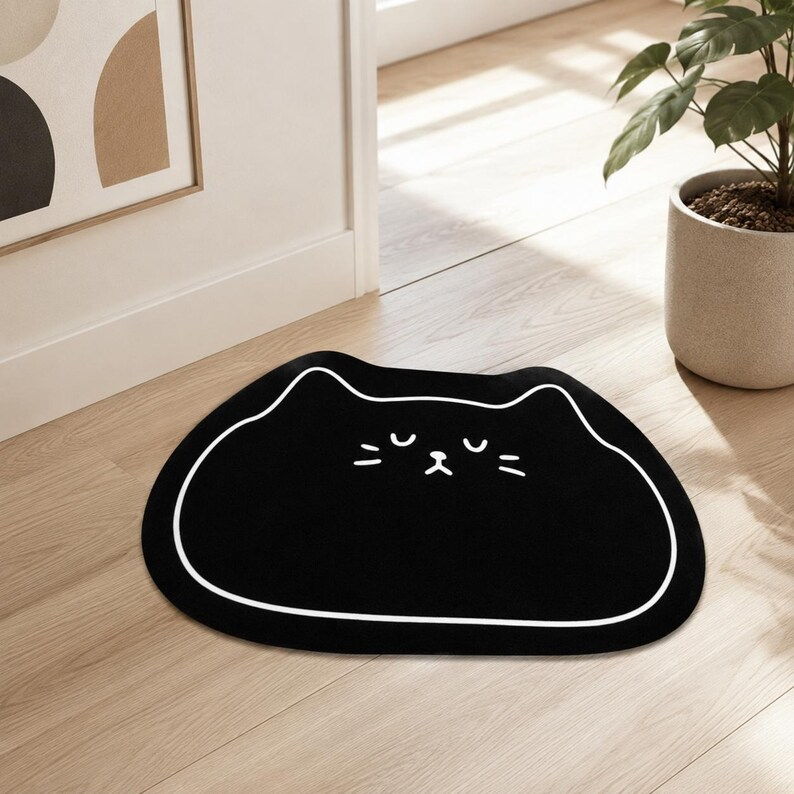
Plate 04Black-cat-shaped mat at a doorway with a white outline
Overlocked outline

Gallery

On the machine floor

Plate 03
Green floral printed mahjong mat on a wooden table with stitched binding
Stitched edge01
Santa-shaped mat in a hallway, printed with a family surname
Die-cut edge02
Black-cat-shaped mat at a doorway with a white outline
Soft edge03

Frequently asked questions

Is stitched binding much more expensive?
About 8–12% more per piece at small volumes, less at scale. It is the cheapest meaningful upgrade on a printed mat: it stops the fraying behind most low-quality reviews and adds years of life.
Can stitched binding follow a shaped outline?
Gentle curves are fine; narrow inward corners pucker. For outlines like bones, paw prints or small-radius leaves, a laser-sealed edge is cleaner. We will tell you which your outline needs before quoting.
What is the difference between overlocked and stitched binding?
Overlocking binds two raw edges together with thread — fast, cheap, coarser. Stitched binding folds a separate tape over the edge and sews through — slower, dearer, smoother to the touch, and far more durable.
Why do mat edges curl?
Usually a packing problem, not a finish problem. A mat rolled too tightly takes a set and the edges lift. Stitched binding makes the edge stiffer, so the curl shows more — mats with stitching should be rolled loosely.
Is a laser-sealed edge waterproof?
It seals the fibres at the cut, stopping fray and slowing water ingress at the edge. Whether the mat itself is waterproof depends on the base material and laminate, not on this edge.
Can a mat have a hanging loop or eyelets?
Both, made to order. Eyelets need a reinforced corner and work well on a 2 mm bound mat; on a stitched shaped outline they are prone to pulling. Tell us the position and we will keep it inside a safe zone.

Keep reading

Send the artwork. Get a mockup tomorrow.

Artwork and one table measurement is all we need. No deposit, no tooling fee, one-piece minimum.