Product line 05 / 12 · TCG & board game mats
A tournament playmat takes more abuse than any other mat we make: sleeved cards dragged across it, elbows planted on it, a dice tray dropped on the corner, then rolled into a tube and carried in a bag. The spec that survives that is narrow, and most of the cheap mats on the market miss it by half a millimetre.
From-price is an ex-factory (EXW Xiamen) unit price — excludes tax, shipping and packaging. Final quote varies with size, material, quantity and destination.

On the press


The standard, and why it is that size
Competitive play defines the mat: 24 × 14 inches (61 × 35.5 cm) is the size that fits a play area with a deck, a discard pile and a life counter inside the frame, on a table that is usually 76 cm deep. Anything smaller and your cards hang off the edge; anything larger and two players cannot sit opposite each other.
The second number that matters is thickness. 2 mm is the point where the mat still rolls into a 14-inch tube, still lies flat within an hour of unrolling, and still absorbs the slap of a card being placed. 1.5 mm feels cheap in the hand; 3 mm does not fit standard tubes and does not lie flat on a tournament table.
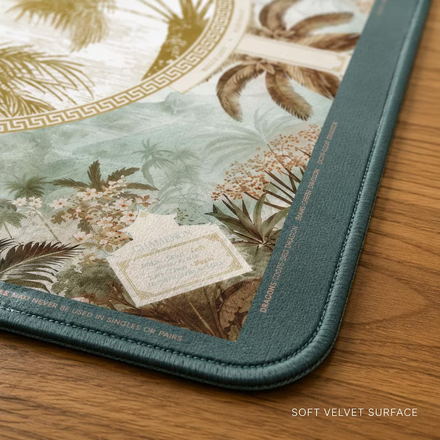
We cut to the millimetre and stitch the edge with a 2 mm polyester thread, because a raw edge on a rubber-core mat starts to separate at the corners after a season of use.
What you can specify

Artwork: where playmat files fail
Bleed, then bleed again. The print runs past the cut line and the stitch lands on top of it. Artwork sized exactly to 24 × 14 in arrives with a 4 mm white ring once the edge is sewn. Send 10 mm of bleed past the trim.
Dark art hides the play area. A playmat is a background: card text and dice need contrast. If your design is a dark photographic scene, put a 40–60% opacity panel behind the play zone, or your buyers will complain that they cannot read a card on it.
Text too close to the edge. Anything within 20 mm of the trim will be partly eaten by the stitch or curl over the edge.
Resolution quoted at the wrong size. '300 dpi' means nothing without a physical size. 7200 px across is 300 dpi at 24 inches and 100 dpi at 72 inches. Send the largest file you have and we will tell you the true dpi at print size before production.
Who buys playmats
Store-branded mats for prize support, in runs of 20–200. One file, reprinted per season.
The classic one-piece order: a personal design, a storefront listing, a reprint when it sells out.
Backer-tier mats produced after the campaign closes. We hold the die line so a late-pledge manager order matches the first print.
Official playmats for organised play, with a printed tube and a sponsor block laid out to your template.
A note on the board-game side
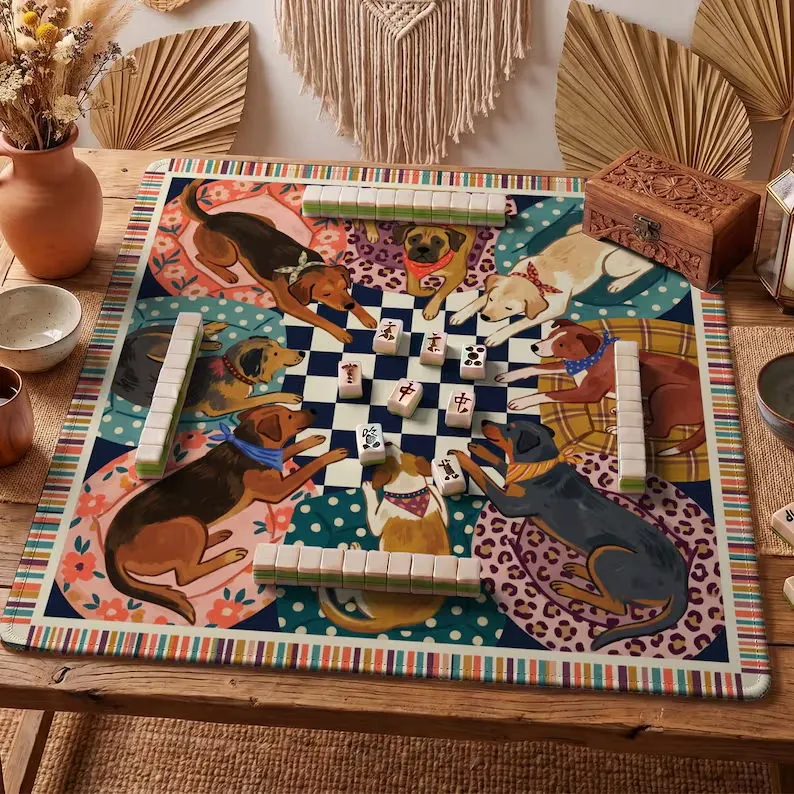
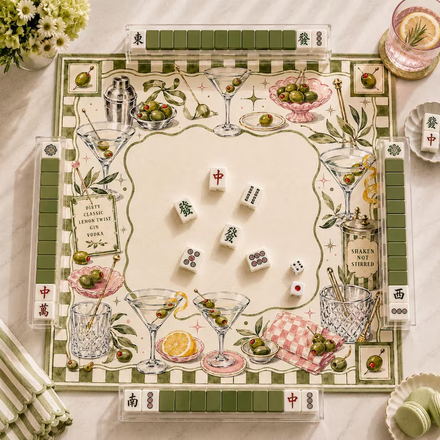
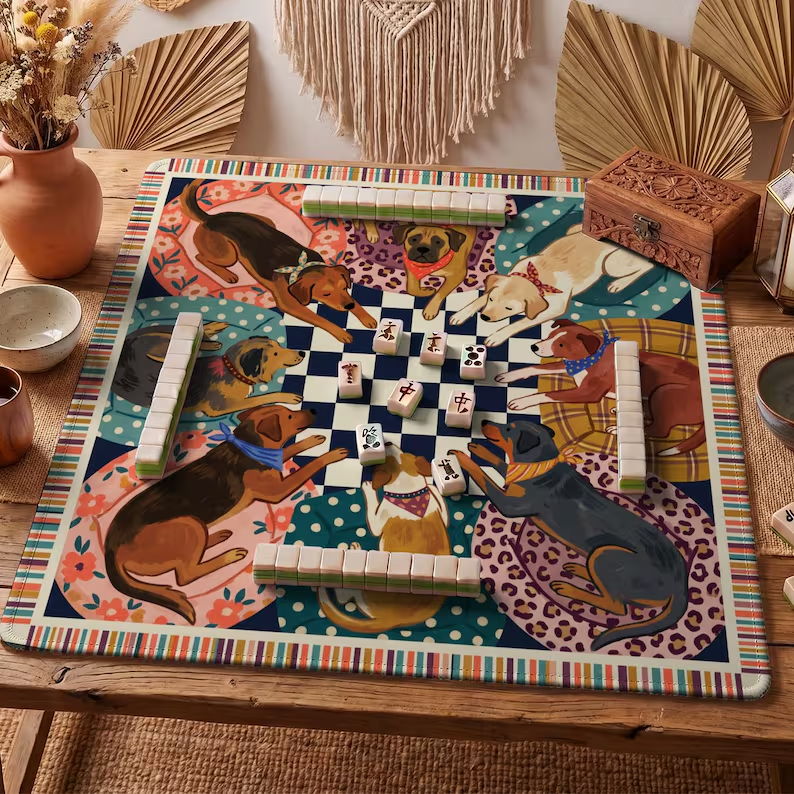
The same construction covers board-game mats: a printed neoprene-style surface with a map, a hex grid or a score track, cut to the board's footprint and folded rather than rolled. We print chess, backgammon and hex layouts on the same 2 mm core, and a laminated rules strip can be printed as a separate piece in the same run.
Plates


Questions
Artwork and a table measurement is all we need. No deposit, no tooling fee, no minimum beyond one piece.