1PC MOQ — NO TOOLING FEE ANY SHAPE · ANY ARTWORK DROPSHIP WORLDWIDE JIT FULL-CONSIGNMENT FBA · TEMU · TIKTOK SHOP WAREHOUSE DELIVERY 12 PRODUCT LINES · ONE FACTORY 1PC MOQ — NO TOOLING FEE ANY SHAPE · ANY ARTWORK DROPSHIP WORLDWIDE JIT FULL-CONSIGNMENT FBA · TEMU · TIKTOK SHOP WAREHOUSE DELIVERY 12 PRODUCT LINES · ONE FACTORY
Home/Journal/Sourcing/Vetting suppliers

Journal / Sourcing

Twelve questions that vet a mat supplier before you pay a deposit.

Most sourcing failures are visible before the order. They show up as a vague answer about the substrate, a sample that came from somewhere else, or terms that shift at the last minute. These twelve questions surface them in twenty minutes.

Filed under SourcingPublished August 2026Reading 6 min
Plate 01Two players drawing tiles on a dark green mahjong mat
Ask for a video of this, not a photo

The questions

  1. What exactly is the surface, and what is the base? Two layers, named separately. 'Rubber mat' is not an answer.
  2. Which print method, on which substrate? Sublimation, screen or UV — and why that one for this product.
  3. Can you send the retained sample of my last order with the next one? A factory that keeps samples can prove consistency.
  4. What is your tolerance on colour, and how do you measure it? ΔE is a real answer; 'very close' is not.
  5. Can I have a video call from the production floor? Not a stock video — a call, with your sample in frame.
  6. What is the HS code you ship this under? A supplier who exports knows it.
  7. What are your payment terms? 30/70 against a bill of lading is normal; 100% upfront is a warning.
  8. Who owns the die line and the artwork? Should be you, unambiguously.
  9. What is your defect rate, and what do you do about it? A number and a process.
  10. Which substrate lots are you holding? Tells you whether your delivery date is real.
  11. What happens if the goods arrive wrong? A named remedy, not a promise to 'look after you'.
  12. Can you show me a mat you made for someone else, in that substrate? Photos are easy; a physical piece is evidence.

The red flags

SignalWhat it usually means
Price 30% below everyone elseA cheaper substrate, or a PVC base described as rubber
No physical address, no videoA trading desk, not a plant
Stock photos of a 'factory'That image is on a dozen websites
Refuses a pre-production sampleThey cannot control the run
Vague on substrateThey buy finished goods and resell
100% payment upfrontNo working capital, or no confidence
Sample arrives without packagingThe order will too
Cannot name the HS codeThey have never exported
Fig. 02Three women playing mahjong on a printed mat at a club table
Consistent second run

What to ask for in writing

A one-page spec sheet signed with the order: substrate, base, thickness, edge, print method, size tolerance (±2 mm), colour tolerance (ΔE ≤ 2), packing, carton quantity and carton dimensions. That single page prevents almost every argument, because every clause is checkable on arrival.

Then a retained sample: one unit from the production run, kept by both sides, labelled with the date and the PO. It is the only artefact that settles a colour dispute six months later.

Trial before trust

Start with one piece. It costs very little and it tests the whole system: how fast the mockup arrives, whether the file handling is competent, whether the parcel arrives intact, and whether the invoice matches the quote.

A supplier who is good at one piece is usually good at five hundred. A supplier who is chaotic at one piece does not become organised at scale.
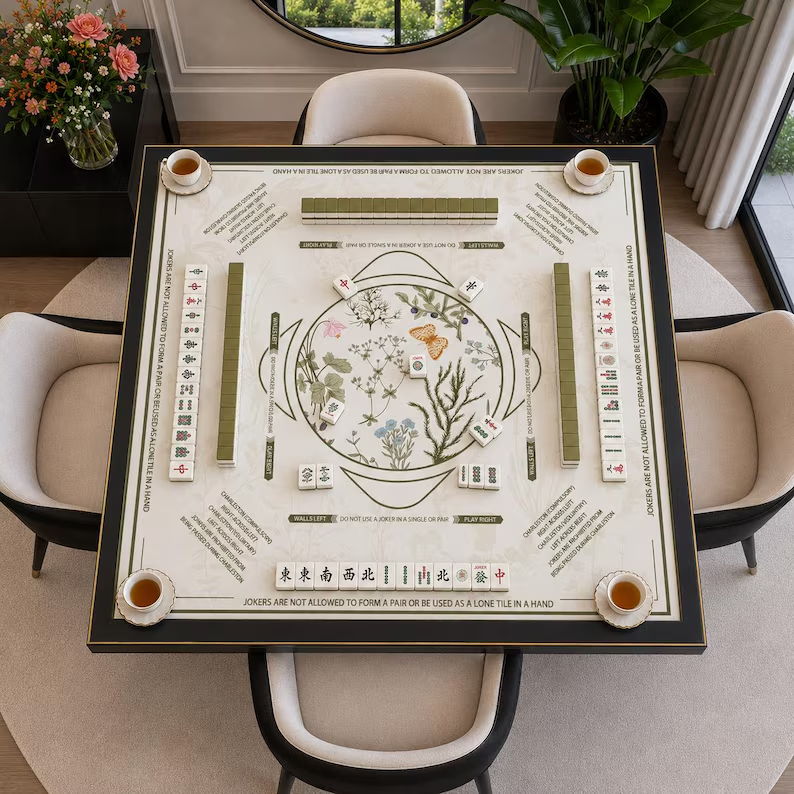
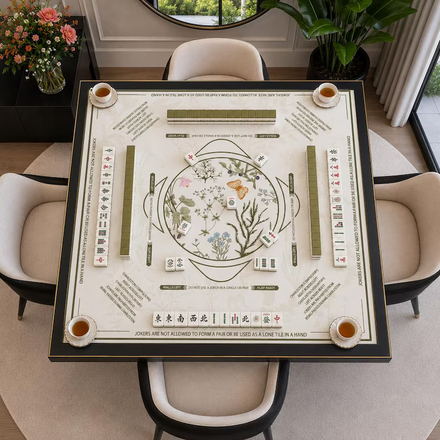
Fig. 04Ivory and gold mahjong mat on a table with green score counters
Second run, in writing

Plates

Seen on the press

03 plates
Two players drawing tiles on a dark green mahjong mat
Press floor01
Three women playing mahjong on a printed mat at a club table
Second run02
Ivory and gold mahjong mat on a table with green score counters
Colour proof03

Questions

What payment terms are normal for mats from China?
30% deposit and 70% against the bill of lading is the common structure for a first order. Established customers move to a net term. A demand for 100% before production is a signal worth investigating, not necessarily a refusal.
How do I verify a factory is really a factory?
Ask for a live video call from the production floor with your sample in frame, and for a physical sample in the substrate you are ordering. A trading company can forward both, but the answers to substrate questions usually give them away first.
What should a spec sheet include?
Surface, base, thickness, edge finish, print method, size tolerance, colour tolerance, packing format, carton quantity and dimensions. If a supplier will not sign one, they will not be held to one.
Is a cheap sample a good sign?
It is neutral. A free sample from a plant that cannot repeat the run is worse than a paid sample from one that can. Pay for the sample and judge the repeat.
How many suppliers should I quote?
Two or three, with the same written spec. Quoting without a shared spec compares different objects — that is how the cheapest quote turns out to be a 1.5 mm mat with a PVC base.
How do I verify a Chinese company is real?
Ask for the business licence and check the 统一社会信用代码 against the name on the invoice, then look the company up on the national credit information system. The three names — licence, invoice, bank account — must be the same entity.

Read next

Send a pattern. Get a mockup tomorrow.

Artwork and a table measurement is all we need. No deposit, no tooling fee, no minimum beyond one piece.