1-piece MOQ — no tooling fee Any shape · any artwork Dropship worldwide Full JIT management FBA · TEMU · TikTok Shop approved 12 product lines · one factory 1-piece MOQ — no tooling fee Any shape · any artwork Dropship worldwide Full JIT management FBA · TEMU · TikTok Shop approved 12 product lines · one factory
Home/Journal/Materials/Surface materials

Journal / Materials & construction

Mahjong Mat Surface Materials: Four Faces Compared

Every mahjong mat listing names a material, but almost none explain what that material means for the three things that actually matter: how steady the tiles sit, how loud the game is, and how good the print looks. Here is the comparison we give buyers on the phone.

Category: MaterialsPublished October 20266 min read
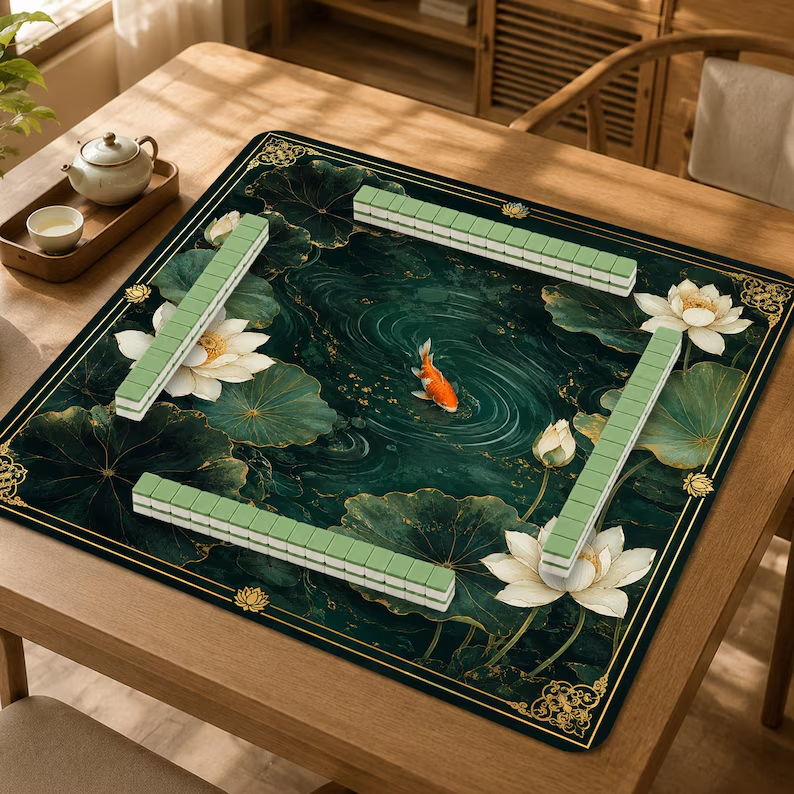
Plate 01Lotus and koi mahjong mat on a dark wooden table
Verdigris print on a jacquard face

Diatomite face: the default

A diatomite coating on a polyester face cloth gives a firm, dry, slightly matte surface. Tiles do not skate; when a wall collapses it goes down as a unit instead of sliding apart — which is the whole point of a mahjong mat.

Of the four faces it is the quietest: dense, with no drumming or rustle. Prints look like ink on uncoated paper — soft edges, rich colour, no glare. The matte finish also hides spills best.

Best for: home game tables, mahjong clubs, and anyone playing in an apartment after 10 pm.

Jacquard: the classic

A woven jacquard face has a clearly visible texture and a little spring under the tiles. It feels like the baize of a good table. Fine lines print sharper on jacquard than on diatomite because the weave holds smaller dots.

It feels livelier, runs slightly louder than diatomite, and a spill sits on the surface for a moment before soaking in. Best for tournament sets, gifts, and buyers who want the mat to read as fabric rather than board.
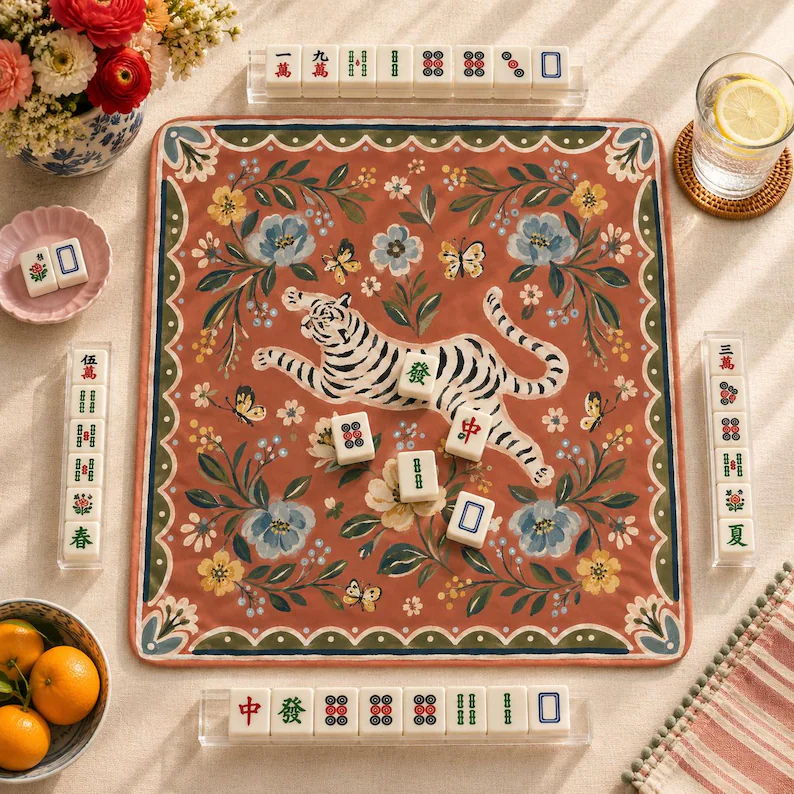
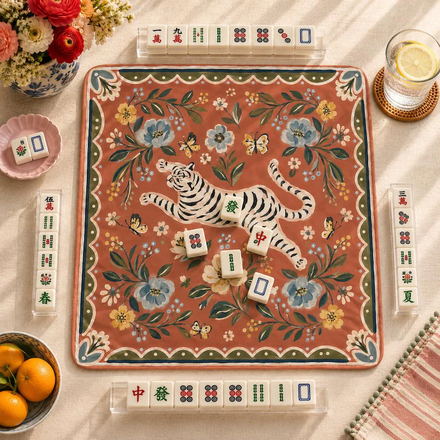
Plate 02Terracotta folk-art mahjong mat with a white tiger print and tiles laid out around it
Folk-art colour blocks

Faux velvet: the premium pick

Short, dense pile and deep colour. Print saturation is the highest of the four, especially on dark grounds, and the hand feel is luxurious — the mat looks expensive before a tile touches it.

The trade-offs: pile traps dust, so it needs brushing rather than wiping; tiles sit slightly lower, which some players love and others do not; and it shows vacuum marks more than any other face. Best for gift sets, resort and club tables, and photoshoots.

Fleece-backed faux cashmere

The thickest, warmest build. Dense pile on a soft backing makes it the quietest on hard floors — the fleece sponge absorbs impact before it reaches the table. Choose it for cold rooms, stone floors, or large tables where a thin mat feels lost.

It is also the hardest to pack. A rolled 5 mm cashmere mat is too wide for a bookshelf gap, and it takes a day to lie flat.
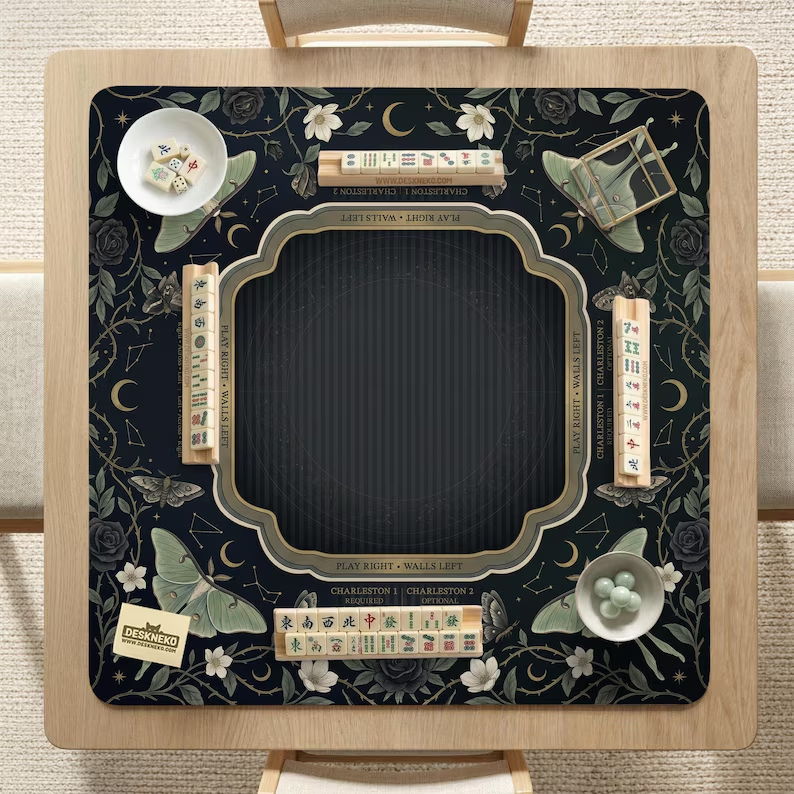
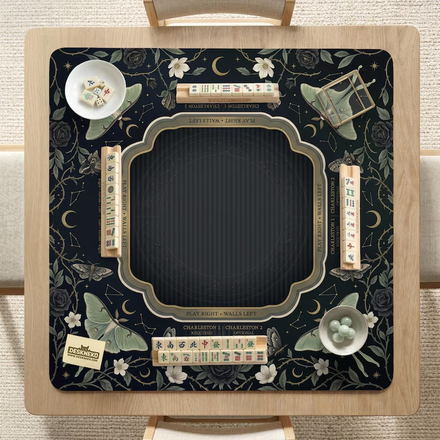
Plate 04Navy and gold Art Deco mahjong mat with tiles stacked in the centre
Dark ground, fine lines

Comparison table

FaceFeelNoisePrintCleaningPrice
DiatomiteFirm, dry, matteQuietestSoft edges, rich colourWipe with a damp cloth1.00
JacquardWoven, slight springQuietSharpest fine linesWipe with a damp cloth1.05
Faux velvetSoft pile, deepQuietHighest saturationBrush / vacuum1.20
Faux cashmereDense, warmQuietest on hard floorsSlightly softerBrush / vacuum1.30

What we recommend for a first order

3 mm natural rubber base with a diatomite face. It disappoints the fewest people: quiet, non-slip, prints well, rolls small enough for a bookshelf, and wipes clean with a damp cloth. Order one piece, use it for a week, then decide whether your market wants velvet.

If your buyers are gift-driven rather than play-driven, start with a 3 mm rubber base and velvet face instead — it photographs better, and it is the one reviews call “premium”. Full construction spec →

Gallery

On the machine floor

Plate 03
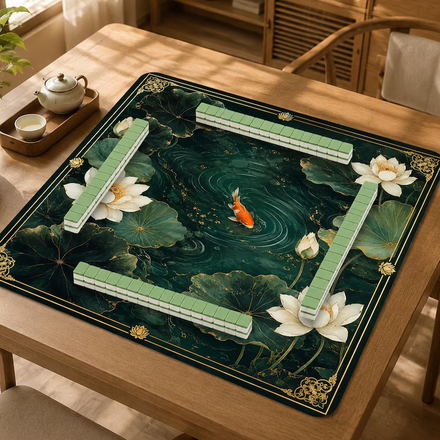
Lotus and koi mahjong mat on a dark wooden table
Jacquard face01
Terracotta folk-art mahjong mat with a white tiger print and tiles laid out around it
Colour saturation02
Navy and gold Art Deco mahjong mat with tiles stacked in the centre
Line resolution03

Frequently asked questions

Which surface is the quietest?
Millimetre for millimetre, diatomite is quietest; overall the quietest build is fleece-backed faux cashmere, because both backing and face absorb impact. For an apartment with neighbours below, go 5 mm cashmere.
Does velvet wear out faster?
The pile flattens over years where tiles are pushed most — a cosmetic change, not structural damage: no pilling, cracking or delamination. Diatomite can polish slightly where tiles are pushed repeatedly. Both are slow, visible changes that appear only after long use.
Can these surfaces print a family name?
Yes — all four, at the same price as a plain mat, from a single piece. Latin letters, Chinese and Japanese all print cleanly. Supply the text as typed characters or outlined vector artwork.
Which face suits a mahjong club?
Sealed natural rubber base with a diatomite face. It wipes clean between games, traps no dust, and is the only face that stands up to nightly wipe-down cleaning. Velvet is the wrong choice for a commercial venue.
Is a thicker mahjong mat always better?
3 mm is the sweet spot: thick enough to dampen tile clatter, thin enough to roll and store. In a room with hard floors and thin walls, 5 mm helps. Beyond that you are buying comfort, not quiet.
Which surface shows age first?
Diatomite develops a slight sheen where tiles are pushed repeatedly — first at the four corners of the play area. Velvet flattens along the common push path. Both changes are slow and cosmetic; neither affects use.

Keep reading

Send the artwork. Get a mockup tomorrow.

Artwork and one table measurement is all we need. No deposit, no tooling fee, one-piece minimum.