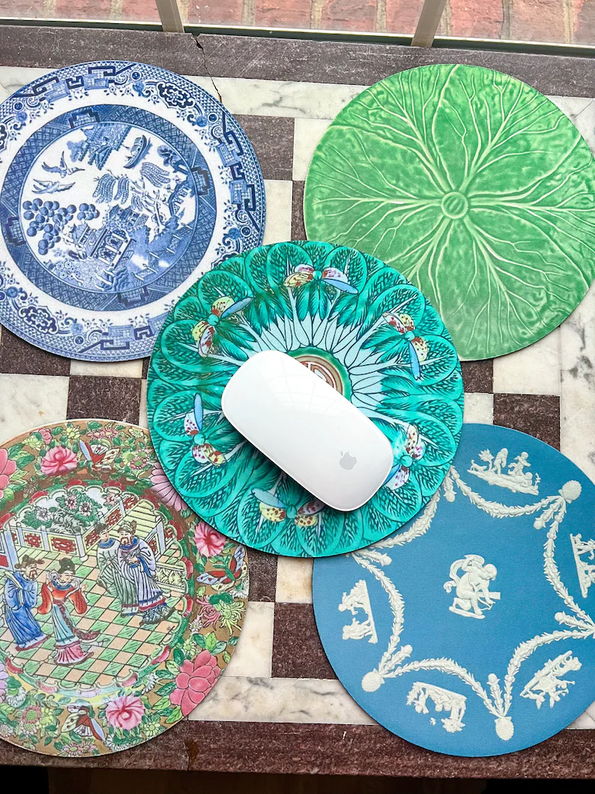
Round: the flattest, and the least forgiving to draw for
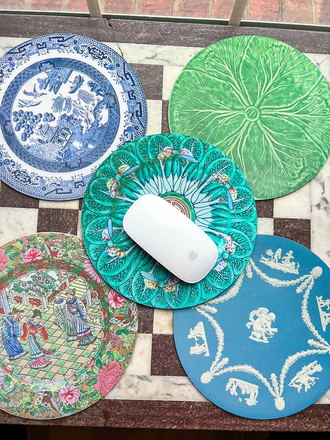
A circle has no corner, so there is nothing to lift. On a round table it lies flatter than a square mat of the same material and it does not catch a sleeve at the corner.
The print problem is the border. A design with a decorative frame drawn for a square mat has to be redrawn as a ring: the corners of the frame disappear, and any element placed at 45° ends up outside the cut. Artwork for a round mat should be composed as a disc from the start, with the border at a constant distance from the edge.
It also wastes the most material — a circle inscribed in a square sheet leaves about 21% as offcut — but because we cut from a roll rather than a sheet, that mostly affects price only at volume.
Square: the practical default
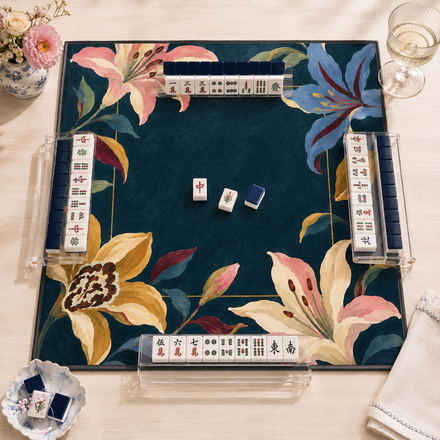
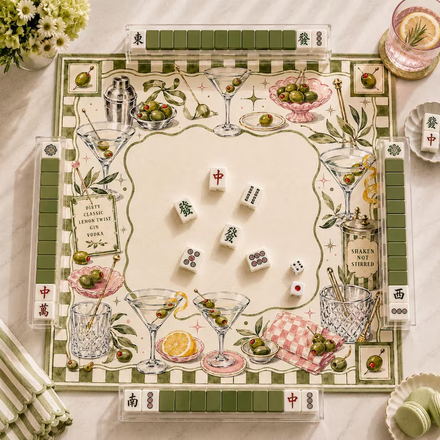
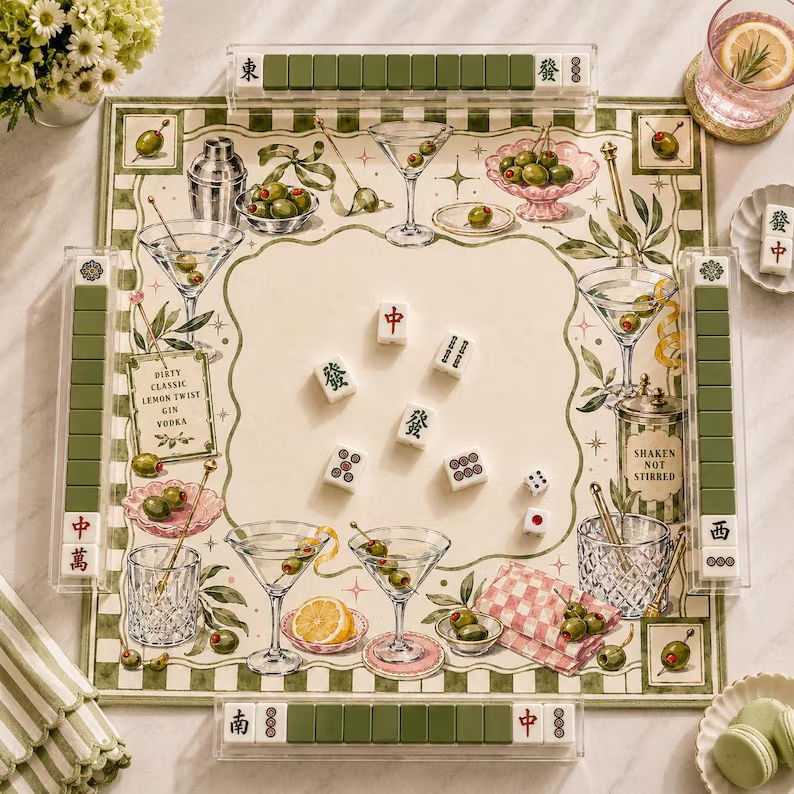
A square mat matches a square playing surface, maximises the printed area, and cuts with almost no waste. Every design convention in the category — bordered, corner motifs, a centred medallion — assumes a square.
Its weakness is the corner. Four corners are where a mat lifts, where the binding gathers, and where a bag catches. A 10 mm corner radius fixes most of it and costs nothing.
Octagon: the compromise that looks deliberate
An octagon removes the extremes of a corner while keeping a strong bordered composition: the eight straight runs take a printed frame, and the four 45° cuts remove the exact points that lift.
It is the shape we recommend when a buyer wants 'not another square mat' without abandoning a bordered design. The print needs a 45° variant of the frame — eight segments rather than four — which is a redraw, not a new design.
What the shape changes in production
| Round | Square | Octagon | |
|---|---|---|---|
| Lies flat | Best | Good | Good |
| Material use | ~79% | ~95% | ~88% |
| Print layout | Composed as a disc | Conventional frame | Eight-segment frame |
| Corner wear | None | Highest | Low |
| Price at 1 pc | Same | Same | Same |
| Price at 500 | Slightly higher | Lowest | Middle |
Plates
Seen on the press
03 plates