Why personalisation works here
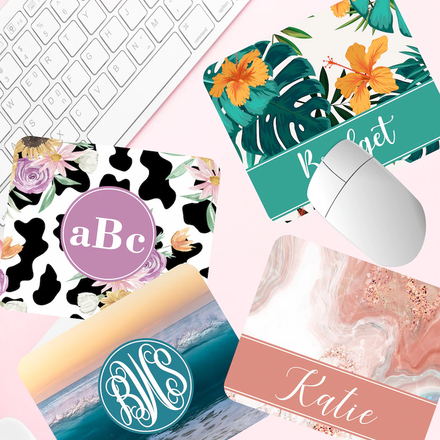
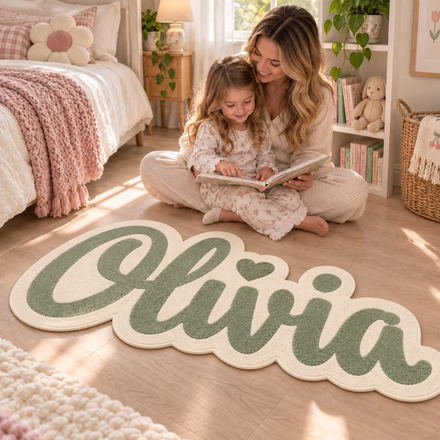
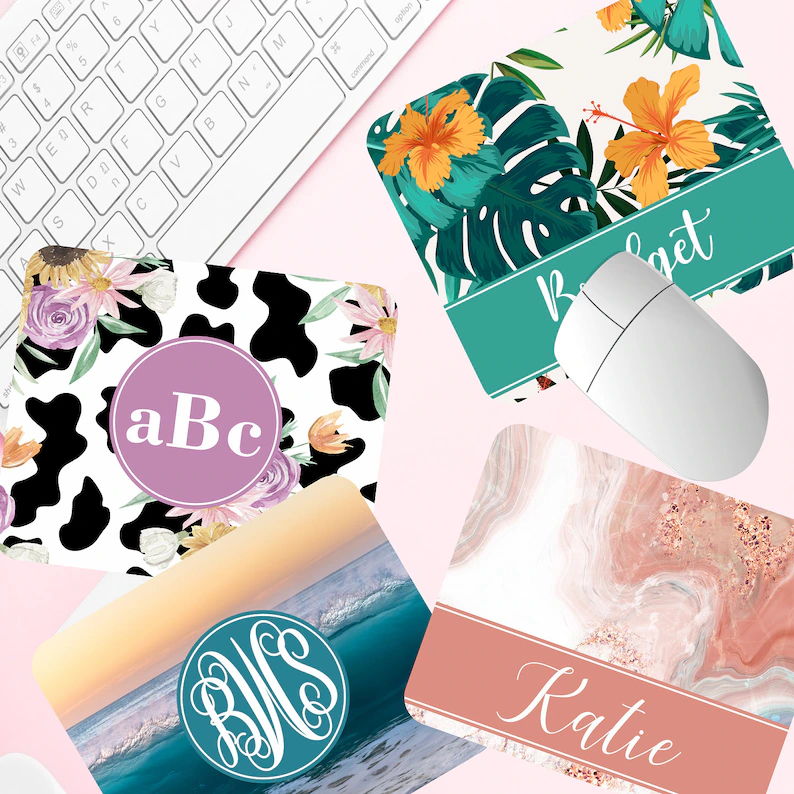
Etsy buyers are shopping for a gift with intent. A generic printed mat is a commodity; 'a mat with our family name and our wedding date' is a commission. The buyer is not comparing prices, because there is nothing to compare against.
The economics are unusual: the unit cost of a personalised mat equals the unit cost of a plain one, because the change is a file edit rather than a new tool. The price premium is therefore almost entirely margin — typically 30–50% over the same mat sold plain.
The listing mechanics
| Element | What works | Why |
|---|---|---|
| Lead time | 7–12 days, stated plainly | Matches production; do not promise 3 |
| Personalisation field | Name + colour + date, three fields | Fewer fields, fewer abandoned carts |
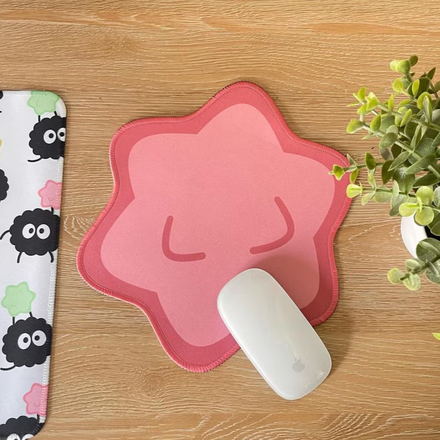
| Mockup image | A real photo with a name on it | Renders do not read as trustworthy |
| Size chart | Second image, always | The main pre-purchase question |
| Shipping | Flat for small, tube for large | Curl is the main complaint |
| Care card | In the box | Prevents the second most common complaint |
Pricing a personalised mat
Build from landed cost, not from competitors. A 60 × 40 cm mat lands at roughly $4–6 at small volume, ships for $6–9, and the platform takes 6.5% plus payment fees. At $39 with a name, contribution is around $18–22 — which is why personalised mats support a small shop in a way that commodity mats do not.
The limit is operational: personalisation means a file per order, a proof per order, and a mistake per hundred orders. Build a proof step into the flow, even if it is a template email.
Shipping flat or rolled
For anything up to 60 × 40 cm, ship flat in a rigid mailer. It arrives perfect, it photographs better in an unboxing, and the postal cost difference is small at that size.
Above that, a tube. Use one 10 mm wider than the roll, and put a card in the box that says to lay it print-side down for a day. It is a sentence that removes a category of complaint.
Plates
Seen on the press
03 plates